







Introduction-
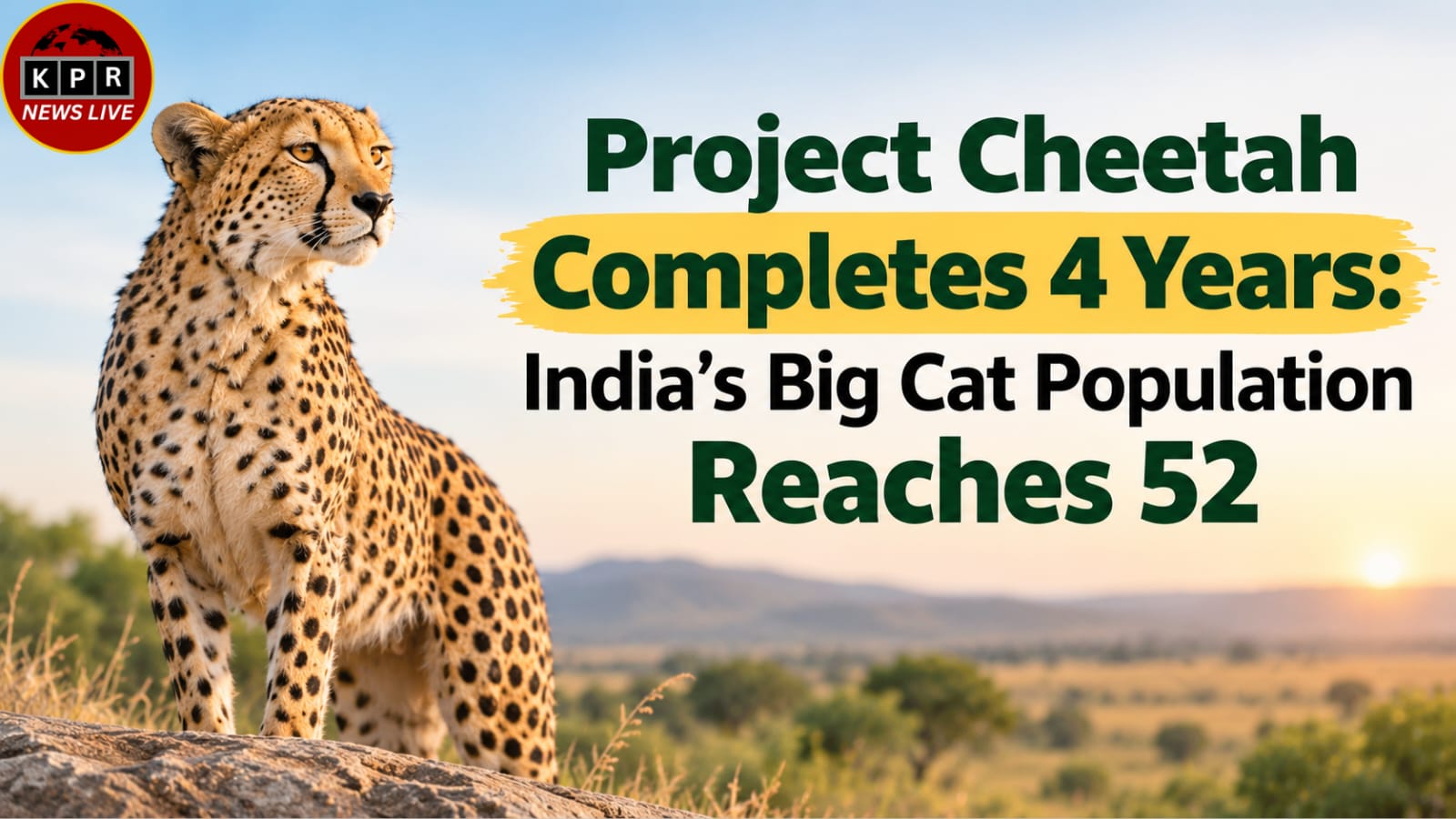
India’s ambitious wildlife restoration initiative has officially crossed a major milestone. As Project Cheetah completes 4 years, the total population of these magnificent big cats in India has successfully risen to 52. This achievement represents a critical turning point for wildlife conservation in the country, proving that large-scale species reintroduction can indeed yield encouraging results.
A Historical Reintroduction Journey
To understand the significance of this achievement, we must look back at history. The Asiatic cheetah was officially declared extinct in India in 1952 due to overhunting and severe habitat loss. Consequently, India remained without cheetahs for over seven decades.
However, in September 2022, the Government of India launched Project Cheetah, the world’s first intercontinental translocation project for a large wild carnivore. Initial batches of cheetahs were brought from Namibia and South Africa to Kuno National Park in Madhya Pradesh. Although the project faced skepticism and initial setbacks, constant monitoring and dedicated care helped stabilize the population over the last four years.
Key Achievements of the Past 4 Years
Over the past four years, Project Cheetah has transformed from a high-risk experiment into a promising conservation model. Some notable highlights include:
Population Growth: The total cheetah population in India has reached 52, including both surviving translocated adults and cubs born on Indian soil.
Local Adaptation: Many cheetahs have successfully adapted to the local ecosystem, prey base, and weather conditions of Madhya Pradesh.
Successful Breeding: The birth of multiple litters in India demonstrates that the animals find the environment safe and suitable for reproduction.
Furthermore, field monitoring teams, veterinarians, and local wildlife authorities have worked round the clock to ensure the health, safety, and tracking of these big cats.
What Lies Ahead: The Next Phase of Cheetah Restoration
While reaching 52 cheetahs is a victory, wildlife experts emphasize that the journey has just begun. According to recent updates, the next phase of the cheetah restoration programme will focus on two major long-term goals:
Expanding Suitable Habitat: Kuno National Park has provided a great starting ground, but expanding into additional sanctuaries (such as Gandhi Sagar Wildlife Sanctuary) is crucial to avoid overcrowding and resource competition.
Establishing a Meta-Population: The ultimate aim is to establish a comprehensive, long-term cheetah meta-population across connected wildlife corridors in India. This strategy ensures genetic diversity and long-term survival
Challenges and the Way Forward
Despite the recent success, several challenges remain on the horizon. Managing human-wildlife conflict, preventing prey depletion, and ensuring adequate corridor protection are essential for sustainable growth. In addition, continuous health monitoring and genetic management will be vital to prevent inbreeding.
Nevertheless, the progress made in these four years proves that strategic wildlife conservation efforts can reverse historical biodiversity losses
Conclusion
The milestone of reaching 52 cheetahs in 4 years is a testament to India’s commitment to ecosystem restoration. As the project steps into its next expansion phase, it offers hope not just for the survival of the cheetah, but for the restoration of India’s grassland and savanna ecosystems as a whole
www.kprnewslive.com
KPR News Live
info@kprnewslive.com