






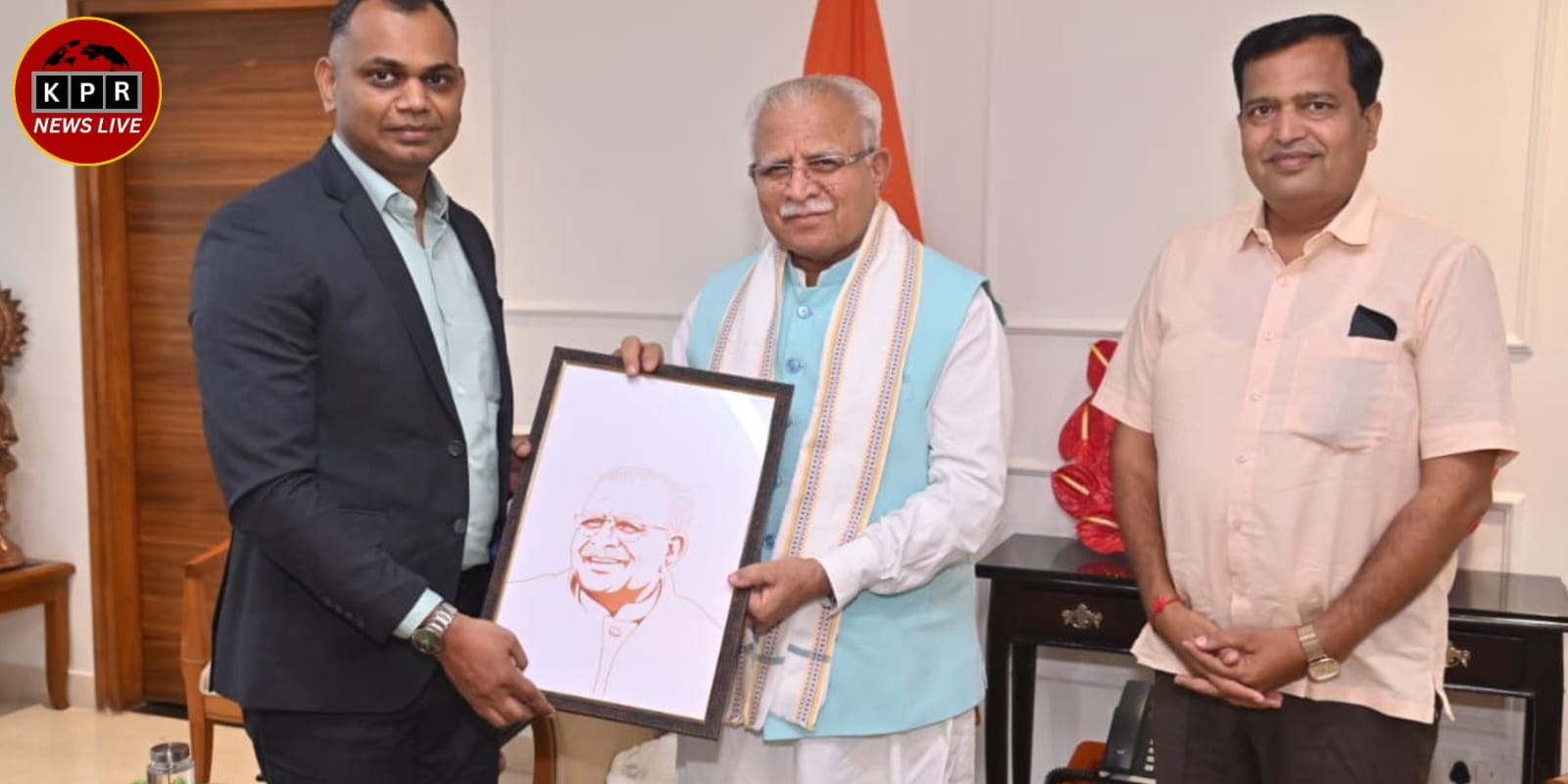
Union Minister Shri Manohar Lal
reviews Build India Foundation’s National Smart Parking & Urban Mobility Reform Framework; MoHUA agrees to work with BIF to carry it forward at the national level
NEW DELHI, 5 September 2026: Shri Manohar Lal, Union Minister of Housing & Urban Affairs, reviewed a proposed National Smart Parking & Urban Mobility Reform Framework presented by Build India Foundation (BIF) at a meeting held on 3 September 2026 at the Ministry of Housing & Urban Affairs, Sankalp Bhawan, New Delhi. The Ministry of Housing & Urban Affairs (MoHUA) agreed to work closely with BIF to take the framework forward at the national level, beginning with the constitution of a technical working mechanism to develop practical tools that Indian cities can adopt. The framework proposes a common national architecture through which cities can diagnose their parking problems, choose the right intervention, finance it through transparent public-private partnership, and integrate it with public transport and digital systems, and measure results. Two flagship programmes anchor the proposal: a 20-City National Demonstration Programme covering metropolitan, Tier-II, tourism, heritage and transit-oriented cities, and a 100-City National Urban Parking Challenge to help Urban Local Bodies identify priority parking and mobility locations using a common, evidence-based methodology. The Hon’ble Minister’s guidance during the discussion placed parking within the wider agenda of urban development, public infrastructure and institutional delivery, rather than treating it as a standalone municipal issue. This direction reinforced the case for moving from individual projects to a scalable, long-term national approach.
A Build India Foundation delegation, led by Mr. Vaibhav Dange, Founder, Build India Foundation, and Mr. Mangesh Wankhade, Lead – National Parking Framework, BIF, met with Shri Manohar Lal, Hon’ble Union Minister of Housing & Urban Affairs, and Ms. D. Thara, IAS, Secretary, Department of Capital Development, MoHUA, to present the framework. Other senior officers of the Ministry were also present at the meeting.
“India does not need a single parking solution. It needs a common national framework that allows each city to choose the right solution, finance it transparently, measure it rigorously and scale what works.”
– Vaibhav Dange, Founder, Build India Foundation
FROM “MORE PARKING” TO “BETTER MOBILITY”
Indian cities are losing scarce urban land, road capacity and commuter time to unmanaged parking. The BIF proposal argues that the answer is not simply more parking spaces, but a national policy architecture that treats parking as a component of the urban mobility system, alongside congestion management, public-transport integration and efficient use of land.
The framework is deliberately technology-neutral and vendor-neutral. Cities would be free to choose surface, multi-level, underground, automated and mechanical, digital or Park & Ride solutions according to local demand, land availability, economics and mobility objectives.
THE CENTRAL IDEA
Create the national rules of the game; let cities select projects; let the market compete transparently to deliver them.
EIGHT PILLARS OF THE REFORM ARCHITECTURE
01 Policy & Regulatory Framework
02 Planning & Demand Assessment
03 Land & Asset Enablement
04 PPP & Financial Framework
05 Technology & Digital Integration
06 Operations & Management
07 Capacity & Institutional Support
08 Data, Monitoring & Performance
Supporting these pillars, the proposal includes a National Parking Opportunity Map, a consolidated database of parking opportunities for cities, investors, lenders and technology providers, and a National Parking Data Architecture setting common standards for occupancy data, digital payments, parking guidance, GIS integration, KPIs and public dashboards.
PRIVATE CAPITAL, PUBLIC CONTROL
A core component of the framework is a standardised pathway for PPP and private-capital participation: Model PPP structures, Model RFPs and Model Concession Agreements that reduce transaction uncertainty for cities while keeping policy, tariffs, public-interest safeguards and performance requirements firmly in public hands.
NEXT STEPS
The next phase is a structured technical process, not a commitment to any particular project, technology or commercial model. It is proposed to include:
▸ Constitution of a MoHUA technical working mechanism
▸ A National Model Smart Parking & Parking Infrastructure PPP Framework
▸ Model RFP and Model Concession Agreement
▸ A national parking-data and KPI architecture
▸ Identification of 20 demonstration cities
▸ Launch of the 100-City National Urban Parking Challenge
▸ Consultation with States, ULBs, experts, knowledge institutions and industry
▸ An implementation toolkit and national policy package
“The objective is not to build parking everywhere, but to enable Indian cities to make better parking decisions. A national policy of this kind cannot be written by one organisation, it has to be built by the people who plan, regulate, operate and live in Indian cities.” – Mangesh Wankhade, Lead, National Parking Framework, Built India Foundation
HELP SHAPE INDIA’S NATIONAL PARKING POLICY
Share your research, case studies or policy recommendations with Build India Foundation at info@buildindia.org.in
About Build India Foundation-
Build India Foundation is a public-policy, advocacy and infrastructure-development organisation that brings together government, professional expertise and field experience to develop practical, scalable policy frameworks for India’s cities and infrastructure.